


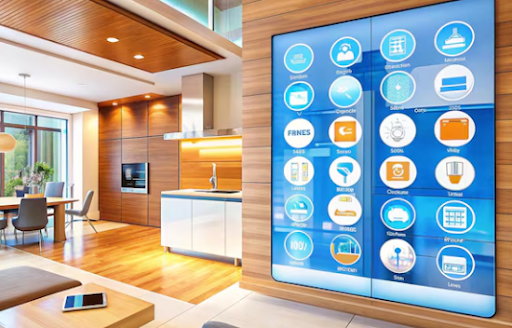
The integration of technology into residential spaces has transformed the modern home from a simple dwelling into an interconnected, intelligent environment.
A smart home automation system allows homeowners to control various aspects of their property—from lighting and climate to security and entertainment—using a single hub, voice commands, or mobile devices.
This shift towards intelligent living is driven by numerous benefits that fundamentally improve convenience, safety, and efficiency. Embracing this technology is not just about adopting a trend; it’s about making a significant investment in a more comfortable and sustainable lifestyle.
Enhanced Energy Efficiency and Cost Savings
One of the most practical benefits of a smart home automation system is its ability to optimize energy consumption. Smart thermostats, for example, learn household patterns and adjust temperatures automatically, reducing heating and cooling when the home is unoccupied.
Similarly, automated lighting systems ensure lights are never left on unnecessarily. By allowing precise, zone-based control over energy use, smart homes significantly reduce utility bills.
Over time, these consistent energy savings provide a substantial return on the initial investment, making the technology financially sound.
Superior Home Security and Peace of Mind
A smart home system dramatically upgrades traditional home security. Integrating features like motion sensors, smart locks, connected garage doors, and surveillance cameras into a single network allows for comprehensive, remote monitoring.
Homeowners can receive real-time alerts about unusual activity, unlock doors remotely for service providers, and even simulate occupancy by programming lights and blinds to adjust while they are away.
This proactive layer of security enhances safety and provides an invaluable sense of security, knowing the property is monitored at all times.
Unmatched convenience and lifestyle improvement
The sheer convenience offered by a smart home automation system transforms daily routines. Imagine waking up to blinds automatically opening, coffee brewing, and preferred lighting levels activating—all triggered by a set schedule or voice command.
Devices communicate seamlessly, eliminating manual adjustments. Whether it’s consolidating all media controls into a single application or setting complex “scenes” (eg, a “Movie Night” scene that dims lights, closes blinds, and starts the projector), automation saves time and simplifies complex tasks, freeing up mental space for more important things.
Increased accessibility and comfort
Smart homes significantly enhance accessibility for individuals with mobility challenges, the elderly, or those with specific needs.
Voice commands or simple button presses can control everything in the home, from adjusting bed positions and opening curtains to changing television channels.
This technology empowers residents by offering a higher degree of independent living. Furthermore, the ability to maintain precise environmental conditions—controlling humidity, air quality, and temperature with minute accuracy—ensures optimal comfort for all occupants.
Higher Property Value and Market Appeal
In the current real estate market, homes equipped with modern technology command a premium. Installing a comprehensive smart home automation system instantly increases a property’s market appeal.
Prospective buyers often view integrated automation, particularly advanced security and energy management systems, as a significant asset rather than a novelty.
It positions the property as modern, efficient, and future-proof, appealing directly to tech-savvy buyers and helping to secure a better price upon resale.
